


Used Volkswagen ID. Buzz Buying Guide: CPO Benefits, Battery, Space and What to Check
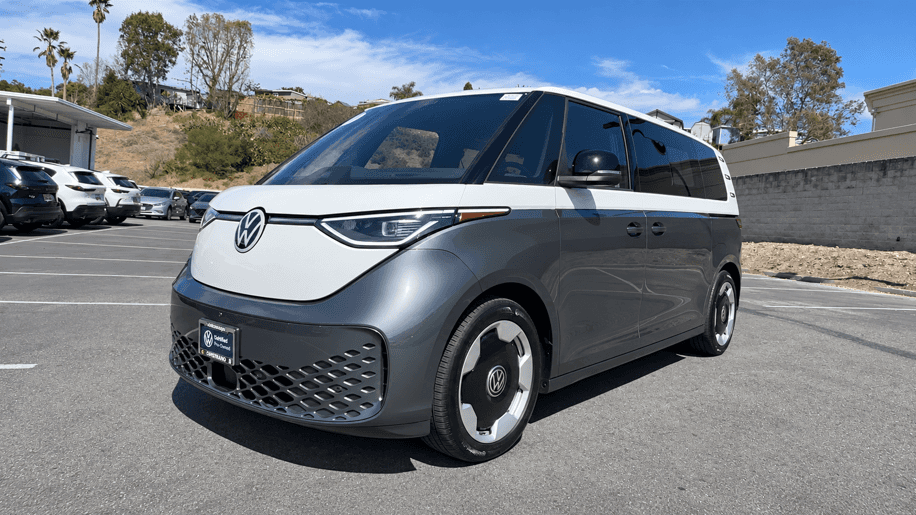
Families, road trippers and people curious about going electric all gravitate toward the ID. Buzz, and the used market makes it more reachable. Still, used ID. Buzz models vary a lot. Trim and drivetrain differ, seating varies, and condition changes with every unit.
At Capistrano Volkswagen, a full-service Volkswagen dealership offering sales, leasing, financing, service, and parts in San Juan Capistrano, CA, we walk shoppers through these details daily. Our used vehicles inventory is the place to begin, and this guide covers what to verify once you find one you like.
Used Volkswagen ID. Buzz Buying Guide: What to Know Before You Shop
So far, 2025 is the only model year of the ID. Buzz sold in the U.S. Volkswagen skipped the 2026 model year here, and the next ID. Buzz is planned as a 2028 model, so the real differences between used vans come down to trim, drivetrain, seating, mileage, condition and certification status. Mileage also tells you how much factory coverage is left, since the New Vehicle Limited Warranty runs 4 years or 50,000 miles and the high-voltage battery warranty runs 8 years or 100,000 miles. Listing filters give you a starting point, but they can’t prove what a van actually has.
RWD vs. Available AWD and Seating Configurations
Rear-wheel drive suits many commuters, while 4MOTION AWD adds power and a Traction mode for loose or slippery surfaces. The model year 2025 lineup is below. Every trim uses a 91-kWh battery and rides on 20-inch aluminum-alloy wheels.
| Trim and drivetrain (MY 2025) | Horsepower | Battery | EPA-estimated range | DC fast charge peak | Seating |
|---|---|---|---|---|---|
| Pro S RWD | 282 hp | 91 kWh | 234 miles | Up to 200 kW | Second-row bench, described as seating up to seven |
| Pro S Plus RWD | 282 hp | 91 kWh | 234 miles | Up to 200 kW | Bench standard, captain’s-chair package available for six |
| Pro S Plus 4MOTION AWD | 335 hp | 91 kWh | 231 miles | Up to 200 kW | Captain’s chairs standard |
| 1st Edition RWD | 282 hp | 91 kWh | 234 miles | Up to 200 kW | Bench |
| 1st Edition 4MOTION AWD | 335 hp | 91 kWh | 231 miles | Up to 200 kW | Captain’s chairs |
Pro S is RWD only. Pro S Plus adds a head-up display, Area View, a 700-watt Harman Kardon audio system, and power sliding doors and tailgate. 1st Edition also has Area View. Always verify the seating on the actual van in front of you.
CPO Volkswagen ID. Buzz: What Certification Can Mean for Your Purchase
A CPO ID. Buzz can add inspection and coverage confidence. It gives extra assurance but no guarantee. Certification is also specific to each van. A used Volkswagen sold at a Volkswagen dealership isn’t automatically certified, so ask for the paperwork.
Certified ID. Buzz Inspection, Eligibility and Coverage Basics
Certification includes a 100+ point dealer inspection, a CARFAX Vehicle History Report, two years of 24-hour roadside assistance and CPO limited-warranty coverage. Inspection checks include brake function and stopping distance, steering noise, effort, vibration and pulling, and maintenance updates. CARFAX is a history resource and says nothing definitive about a van’s condition.
For qualifying MY20-and-newer CPO vehicles purchased on or after April 1, 2026, the CPO Limited Warranty adds two years or 24,000 miles, whichever comes first. It starts when the New Vehicle Limited Warranty expires, or on the CPO sale date if that warranty has already expired. Covered repairs carry a $50 deductible per dealer visit.
Eligibility depends on model year and the CPO sale date, and coverage depends on the model, model year and purchase date. Review Capistrano Volkswagen’s CPO program and our Certified Pre-Owned inventory, then ask our team about the specific van.
How CPO Works Alongside the High-Voltage Battery Warranty
These are separate coverages, so keep them separate. The New Vehicle Limited Warranty is four years or 50,000 miles and transfers to a subsequent owner for the remaining term.
The high-voltage battery warranty runs eight years or 100,000 miles from the original in-service date and transfers for the remaining term. It covers defects in materials and workmanship, plus repairs needed to return battery net capacity to a level of 70%, which may not return the battery to an “as new” 100%.
Certification does not restart or extend the battery warranty. Ask for written confirmation of how each coverage applies to the VIN.
Volkswagen ID. Buzz Battery: Health, Range and Charging Checks
Judge the battery on more than odometer miles. Mileage reflects past use and says little about remaining capacity or how the van charges. Rated range, a listing’s estimate, the dashboard prediction and a battery-health report each answer different questions.
Remaining High-Voltage Battery Coverage and CPO Battery Health Status Reporting
Remaining coverage depends on the individual van. Work it out from the original in-service date, current mileage and the warranty booklet, and confirm capacity conditions and transfer terms.
EV CPO inspections can include a Battery Health Status report. Ask us to show you the report for a specific van, and ask when it was completed and what it establishes. Don’t assume a marketplace battery score is a Volkswagen report. Battery capacity decreases with time and use, so state of health and displayed range are different measures.
Questions to ask before you buy:
- Can I see the Battery Health Status report for this VIN?
- What does the charging history show?
- How many key fobs come with the van?
- Are there any open recalls?
Estimated Range and Charging Capability: Level 2 and DC Fast Charging
The EPA-estimated range is 234 miles for RWD and 231 miles for 4MOTION. Actual range varies with driving and charging habits, accessories, temperature, topography, battery age, load and vehicle condition. For coastal commutes around San Juan Capistrano, that usually leaves comfortable room. Plan a reserve for freeway runs and hot days.
At home, Level 2 charging at 240 V and 11 kW takes approximately up to nine hours from empty. Equipment is sold separately and may need installation and wiring, so consult a qualified electrician about charger installation. Home charging is part of daily ownership, so confirm your setup before you buy.
On the road, DC fast charging peaks at up to 200 kW. A 10-80% charge can take as little as 26 minutes at a 200-kW-or-higher charger. Times vary with temperature, charger type, battery condition and starting charge. Volkswagen also warns that frequent consecutive fast charging can permanently decrease capacity.
Battery Charge Care Mode can set the target charge to 80%. The battery can precondition for DC fast charging when you set a charger as a navigation destination. An approved NACS DC adapter, sold separately, works with compatible DC chargers, including participating Tesla Supercharger sites. Volkswagen says not to use it with any Level 1 or Level 2 AC chargers, including home chargers with NACS connectors. Plan road trip routes ahead. The original 2025 charging plan is nontransferable, and Plug&Charge is not valid for subsequent owners.
Passenger and Cargo Needs: Does a Used ID. Buzz Fit Your Life?
The cargo volume is 18.6 cu ft behind the third row and 75.5 cu ft behind the second row. With the second row folded and the third row removed, it is 145.5 cu ft. Legroom is 37.5 in front, 39.9 in the second row and 42.4 in the third row.
The second-row bench folds 60:40, reclines 16 degrees and slides up to 7.9 inches. It moves forward 4.7 inches for third-row access. Third-row seats slide, recline, fold flat and can be removed individually. LATCH anchors and tethers are on the second and third rows. Pro S Plus and 1st Edition include a Flexboard that creates a flat floor with the seats folded.
Seating needs a caution. Volkswagen’s materials describe six or seven seats depending on trim, drivetrain and second-row configuration. Recall 72LC covers 5,637 U.S. 2025 ID. Buzz vehicles, and the total may include vehicles already repaired. It states the third-row bench is intended for two passengers because there is no seat belt for a third. Don’t count on seven usable seats without VIN-specific recall and seat verification.
Who this fits:
- A family of five should seat all five in their normal arrangement, then check how much cargo room is left.
- A surf and gear hauler can fold the second row and remove the third to reach 145.5 cu ft.
- A small business user should test whether regular loads fit with the needed seats in place.
Bring your child seats and gear to test the fit, and check the door and seat mechanisms and interior wear too. If a three-row van turns out to be more than you need, our used and Certified Used ID.4 inventory offers a smaller electric SUV built on the same Volkswagen EV foundation.
Inspection Checklist for a Used Electric Van
A favorable report supports your assessment but never replaces a physical inspection. Weigh the history, battery documentation, inspection findings and your driving impressions together. Our service department can also help with software and tire questions after purchase.
Vehicle History, Recalls and Service Campaigns
- Match the VIN on the van to the listing, history report and warranty paperwork.
- Review ownership, title status, accident records and maintenance history.
- Ask for dealer campaign records, which are the valid way to check a VIN for recalls and campaigns.
- Ask for proof that any applicable work was completed.
- Add the VIN to the myVW app, which can show active coverages, vehicle health reports, maintenance alerts, recall and campaign notices, and service history.
- Inspect panels, glass and accessible underbody areas for damage.
- Have an EV-qualified technician look at any battery enclosure concerns.
Software Updates, Tires and Brakes
- Test infotainment, navigation, connectivity, cameras and driver-assistance features.
- Note that some connected services may require the latest software update, and availability depends on model, model year and trim.
- Send software-update questions to the VW Help Center, or ask our team.
- Check tire size and condition on the individual van.
- Test braking and investigate vibration, pulling or unusual noises.
- Inspect the charging port and ask which cables or accessories are included.
Test Drive Considerations
A good drive tells you what a spec sheet cannot. Try one-pedal driving and feel the regenerative braking. Listen for cabin noise and check visibility, then try parking in a tight space. Test infotainment responsiveness, then cycle through the driving modes: Eco, Comfort, Sport and Custom. They affect steering weight and throttle response, and AWD adds Traction mode. Volkswagen says driver-assistance features do not replace attentive driving.
Browse Used ID. Buzz Inventory at Capistrano Volkswagen in San Juan Capistrano
Browse our current used ID. Buzz inventory to see what’s on the lot today, then contact us to confirm the configuration and CPO status of any van you like, whether you’re in San Juan Capistrano or coming from across Orange County.
Ask for the VIN, history report, equipment details and any battery assessment, and request written pricing that itemizes taxes, registration, dealer charges and optional products. For financing questions, start with our financing application.
Visit us at 32922 Valle Rd in San Juan Capistrano, or call sales at 949-493-4511 or service at (949) 755-8330.
FAQs About Buying a Used Volkswagen ID. Buzz
What determines CPO eligibility? It depends on model year and the CPO sale date. Ask our team to confirm the status and documents for a specific van.
How do I judge battery degradation? Mileage and dashboard range alone won’t tell you. Ask for the Battery Health Status report where available, plus service history and a qualified inspection. Capacity decreases with time and use.
Do I need home charging? Level 2 is a practical option for routine charging. Equipment is sold separately and may need installation, so talk to an electrician. DC fast charging suits shorter stops on trips.
Is AWD available? Yes, on some vans. 4Motion AWD was offered on the Pro S Plus and 1st Edition, while the Pro S is RWD only. Since 2025 is the only U.S. model year so far, check the drivetrain on the specific van’s window sticker or listing.
What is the towing capacity? Check the owner’s manual and ask our team.
What should I bring to a test drive? Bring your driver’s license, child seats, regular gear and your typical passengers. Also bring your questions about the battery report, charging history, key fobs and open recalls.
Features, coverage and eligibility should always be confirmed with our team for a specific vehicle.
0 comment(s) so far on Used Volkswagen ID. Buzz Buying Guide: CPO Benefits, Battery, Space and What to Check