


2026 VW ID.4 vs Polestar 3: Complete Comparison
Shopping for an electric SUV means weighing your priorities carefully. The 2026 VW ID.4 vs Polestar 3 comparison reveals two completely different philosophies on electric mobility. One delivers accessible electric driving with family-focused practicality starting at $45,095, while the other targets premium performance enthusiasts at $67,500. If you’re ready to explore our new vehicle inventory, we can help you experience the ID.4’s compelling value firsthand.
Choosing the right electric SUV goes beyond specs. Your daily driving habits, passenger needs, and budget all shape the perfect match for your San Juan Capistrano or Orange County commute.
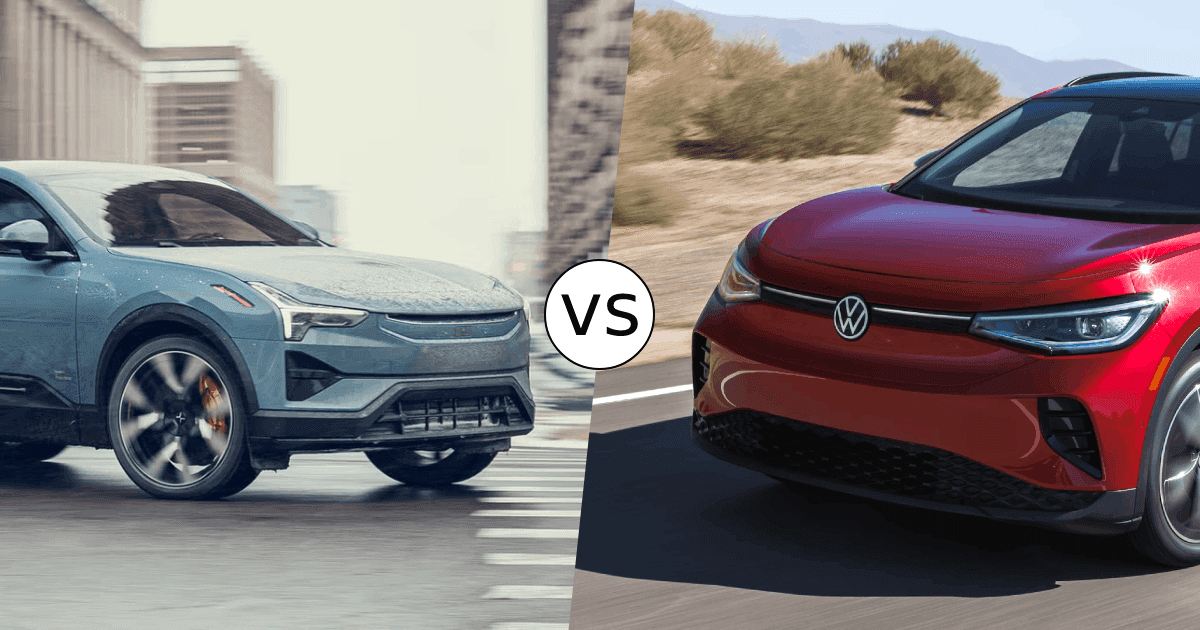
2026 VW ID.4 vs Polestar 3: Key Differences at a Glance
These electric SUVs couldn’t be more different in their market approach. Volkswagen designed the ID.4 to bring electric driving to mainstream buyers, particularly families wanting practical transportation without the luxury price tag. The Polestar 3 takes another path entirely, focusing on performance credentials and premium touches.
| Feature | 2026 VW ID.4 | 2026 Polestar 3 |
| Starting MSRP | $45,095 | $67,500 (Single Motor) |
| Horsepower | 282 hp (RWD) / 335 hp (AWD) | 329 hp (RWD), 536 hp (AWD), 671 hp (Performance) |
| EPA Range | 291 miles (RWD) / 263 miles (AWD) | 350 miles (Single Motor) to 279 miles (Performance) |
| Drive Type | RWD / AWD | RWD / AWD |
| Length | 180.5″ | 192.9″ |
| Cargo Volume | 30 ft³ (64 ft³ folded) | 17.1 ft³ (49.8 ft³ folded) |
The ID.4 offers a roomier cabin and bigger cargo area, making it the obvious winner for families needing extra space. At 180.5″ long and 72.9″ wide, it’s 12.4″ shorter and 4.5″ narrower than the Polestar 3, giving you better maneuverability around town. The ID.4 emphasizes versatility and everyday usability, while the Polestar 3 creates a more engaging driving experience wrapped in Scandinavian luxury styling.
Pricing and Value: Where the ID.4 Shines
Price differences create the biggest decision point for most buyers we see. The ID.4 Pro RWD starts at $45,095, while the Polestar 3 Single Motor begins at $67,500. That’s more than $22,000 more. This gap makes the Volkswagen accessible to cost-conscious consumers who still want modern EV technology.
The ID.4 delivers advantages beyond the sticker price too. Lower maintenance costs through our certified service team, reduced insurance premiums, and better efficiency combine to strengthen its value story.
2026 VW ID.4 Pricing Breakdown
The ID.4 trim lineup gives you multiple entry points into electric SUV ownership. Base models include essential features that families actually need, while higher trims add convenience and tech upgrades without reaching luxury territory.
Federal tax credits and state incentives can reduce the ID.4’s effective purchase price even further. These financial benefits, combined with competitive pricing, make it one of the more affordable electric SUV options out there. Our team helps you apply for financing and verify your eligibility for these programs since they significantly impact total ownership costs.
Polestar 3 Pricing Overview
Polestar positions the 3 as a luxury electric SUV. Starting prices reflect that premium positioning. The Single Motor configuration starts at $67,500, while the Long range Dual Motor reaches $73,400. Each upgrade increases the total investment substantially.
Cost-Per-Feature Analysis
What buyers get for their money reveals interesting patterns. The ID.4 packages more standard equipment at lower price points, delivering better value on essential features. Advanced driver assistance technologies, quality interior materials, and modern infotainment systems come standard without expensive option packages.
The Polestar 3 includes premium features that elevate the driving experience. Yet the cost-per-feature calculation favors the ID.4 for buyers prioritizing practical value.
Electric Range and Efficiency
Real-World Range Expectations
The Polestar 3 offers up to 350 miles of EPA-estimated range, while the ID.4 delivers 263-291 miles depending on configuration. For typical commuting patterns around Orange County and local errands, the ID.4’s range proves adequate while delivering lower energy costs per mile.
Charging Network Access and Compatibility
Both vehicles support DC fast charging with solid speeds. The ID.4 accepts up to 175 kW, achieving 10-80% charge in roughly 30 minutes. The Polestar 3 handles up to 250 kW with similar 10-80% charging times around 30 minutes. This charging parity means both work equally well for daily driving and road trips.
Interior Space and Everyday Practicality
Passenger Comfort and Cargo Capacity
Interior roominess becomes immediately obvious when comparing these electric SUVs. The ID.4 provides 56 cubic feet of passenger volume and 44 cubic feet in the second row, making it better suited for families with growing children or regular carpool duties. Rear-seat passengers get generous legroom and headroom.
Cargo capacity differences strongly favor the ID.4. The Volkswagen offers 30 cubic feet behind the second row, expanding to 64 cubic feet with seats folded. Weekend adventures and vacation trips benefit from this extra space. The ID.4 also handles up to 2,700 lbs of towing capacity for trailers or bike racks.
Family-Friendly Features
The ID.4 includes thoughtful touches like versatile seating arrangements, multiple storage compartments, and easy-to-clean interior materials. Parents appreciate the straightforward controls and intuitive layout that makes daily use hassle-free.
Technology and Driver Assistance
Infotainment and Connectivity
The ID.4’s 12.9″ infotainment touchscreen paired with a 5.3″ digital gauge display earns praise for straightforward usability. Wireless Apple CarPlay and Android Auto come standard, connecting devices reliably for navigation, music streaming, and hands-free communication. Standard navigation is included across the lineup.
Standard Safety Features Compared
Safety equipment packages reveal another area where the ID.4 delivers impressive value. We include numerous driver assistance technologies as standard equipment, providing peace of mind without expensive option packages. Features like automated emergency braking with pedestrian detection, lane-departure warning with lane-keeping assist, blind-spot monitoring, rear cross-traffic alert, and adaptive cruise control all come standard.
Both SUVs meet modern safety standards comprehensively. Differences emerge in feature sophistication rather than fundamental protection.
Ownership Costs and Long-Term Value
The ID.4 projects lower total ownership costs through several factors. Maintenance expenses remain modest thanks to Volkswagen’s established service network and the simplified mechanical nature of electric drivetrains. Insurance premiums typically cost less due to the vehicle’s mainstream positioning and lower replacement costs.
The Polestar 3’s premium status creates higher ongoing expenses. Insurance companies charge more to cover luxury vehicles, reflecting increased repair and replacement costs. These factors accumulate over years of ownership, widening the total cost gap between these electric SUVs.
Which Electric SUV Is Right for You?
Choosing between the 2026 VW ID.4 vs Polestar 3 requires honest assessment of your priorities. Budget-conscious families seeking practical electric transportation find compelling reasons to choose the ID.4. Its combination of affordable pricing, spacious interior, and strong value proposition addresses mainstream buyers’ needs effectively without premium-level investment.
The Polestar 3 appeals to buyers who prioritize performance and luxury over affordability. Your regular driving patterns matter too. Local driving around San Juan Capistrano makes the ID.4’s efficiency and compact dimensions particularly relevant.
If you’re considering the ID.4 and want to experience it yourself, we invite you to view our ID.4 models at Capistrano Volkswagen. We provide comprehensive support for buyers exploring electric vehicle options, including expert guidance on the ID.4’s capabilities, available incentives, and financing options. Contact our team at (949) 493-4511 to schedule a test drive.
Frequently Asked Questions
How does the ID.4’s range compare to the Polestar 3 in real-world conditions?
The Polestar 3 achieves up to 350 miles of EPA-estimated range, while the ID.4 delivers 263-291 miles depending on configuration. The ID.4 handles typical daily commuting comfortably while offering better energy efficiency per mile traveled.
Which vehicle offers better value for families?
The ID.4 provides superior value through its combination of lower pricing ($45,095 vs $67,500), more spacious interior, greater cargo capacity (30-64 ft³), and family-friendly features. The nearly $22,000 price difference allows families to invest savings elsewhere.
What are the main charging differences between these electric SUVs?
Both achieve similar real-world charging performance, reaching 10-80% in roughly 30 minutes. The ID.4 accepts up to 175 kW DC fast charging, while the Polestar 3 handles up to 250 kW.
How do maintenance costs compare over time?
The ID.4 typically incurs lower maintenance costs due to its mainstream positioning and Volkswagen’s widespread service network. The Polestar 3’s premium status generally means higher service costs when maintenance becomes necessary.
Is the Polestar 3’s higher price justified?
For buyers prioritizing performance and luxury appointments, the Polestar 3’s premium price delivers corresponding benefits. Budget-conscious buyers seeking practical electric transportation find better value in the ID.4’s more accessible pricing and strong feature set.
0 comment(s) so far on 2026 VW ID.4 vs Polestar 3: Complete Comparison