


2026 Volkswagen Taos vs Hyundai Santa Fe
Choosing between the 2026 VW Taos and Hyundai Santa Fe means understanding what you’ll actually use versus what looks good on paper. Both compact SUVs appeal to Orange County drivers, but they take different approaches to space, efficiency, and everyday practicality.
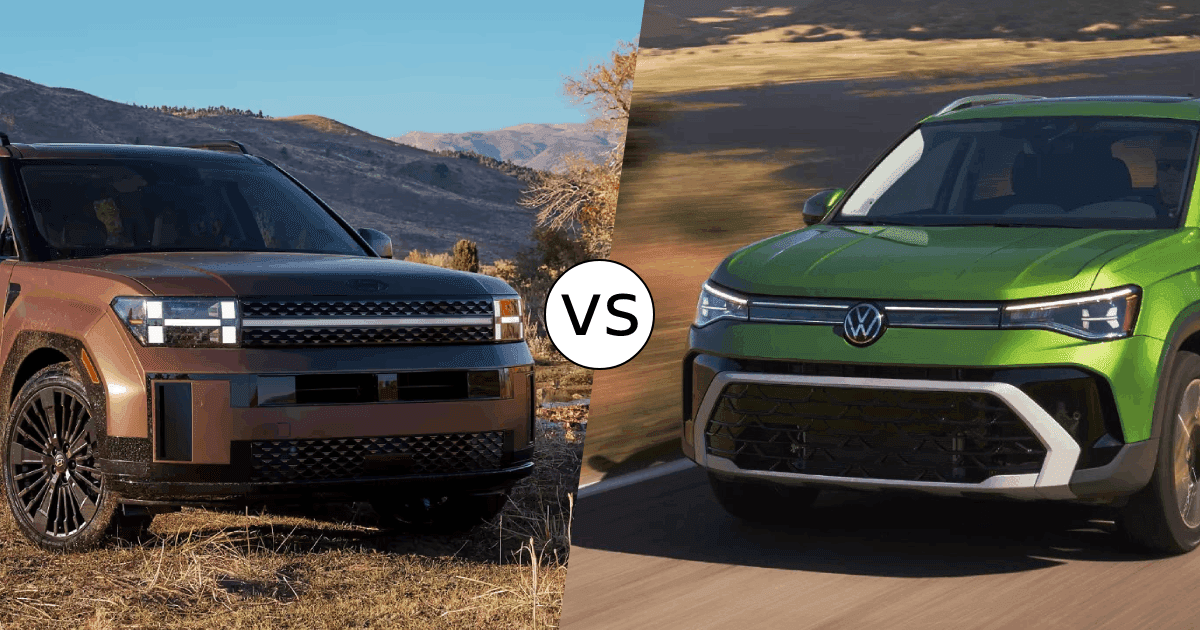
2026 VW Taos vs Hyundai Santa Fe: Which SUV Delivers Better Value?
Shopping for a compact SUV in Orange County? You’ve probably narrowed it down to these two, and honestly, the choice comes down to what matters for your daily reality. At Capistrano Volkswagen, we see families wrestling with this decision constantly, and the answer depends on how you’ll actually use your SUV.
Here’s what stands out: the Taos delivers better everyday cargo space behind the second row and fuel economy that makes a real difference during your commute. The Santa Fe counters with more horsepower and an available third row. But here’s the question worth asking: how often will you actually need those extras versus the features you’ll use every single day?
We’ll break down where each SUV truly excels and help you figure out which fits your real life. If you’re dealing with Orange County traffic every day, hunting for parking near the beach, and want genuine long-term value over features you’ll rarely touch, this comparison gets pretty interesting.
Pricing and Cost of Ownership Comparison
Starting MSRP and Trim Value Analysis
The numbers don’t lie. The 2026 VW Taos enters the market with a significantly lower starting price. We’re talking about a gap that reaches into the thousands, not just a few hundred bucks. That substantial difference ripples through your entire ownership experience in ways that matter.
Think about what that price gap actually means in your budget. Put it toward your down payment and your monthly payments drop significantly. Keep it in your pocket, and you’ve got breathing room for other priorities or investments. Either way, it’s serious money that keeps working for you instead of disappearing into a higher sticker price.
The base Taos S comes loaded with safety tech and connectivity features you’ll use daily. The Santa Fe gives you more trim choices, but each step costs more, making that initial price gap even wider as you climb the ladder.
Long-Term Ownership Savings
Your purchase price is just the opening act. The Taos keeps saving you money through cheaper insurance, lower registration fees, and maintenance costs that won’t shock you. Insurance companies favor compact SUVs, and the Taos hits that sweet spot perfectly.
Volkswagen’s German engineering reputation helps the Taos hold its value. Its practical size appeals to a wide range of used car shoppers too. Meanwhile, the Santa Fe competes in a crowded three-row market, which typically means faster depreciation.
Stack up the fuel savings, and your total ownership picture changes dramatically. Over five years, we’re talking about savings that can easily reach five figures. That’s money staying in your pocket instead of vanishing into vehicle costs.
Fuel Efficiency and Everyday Driving Costs
Fuel Economy Comparison
Real-world fuel economy creates a clear winner. The Taos hits 31 MPG combined with front-wheel drive, which translates directly to what you pay at the pump. The Santa Fe manages 24 MPG combined, burning more fuel to deliver power most people never actually need.
California commuting tells the story perfectly. Drive your typical 12,000 miles a year with our gas prices, and that efficiency advantage saves you hundreds annually. Over your entire ownership period, you’re looking at thousands in recurring savings that stack on top of the lower purchase price.
Performance and Daily Driving
The Taos doesn’t sacrifice performance for efficiency either. Its turbocharged 174-horsepower engine handles freeway merging confidently and delivers solid passing power when you need it. The Santa Fe’s 277-horsepower sounds impressive on paper, but most drivers never tap into that power while paying for it every single fill-up.
City driving particularly favors the Taos. Its compact build and lighter weight deliver better mileage in stop-and-go traffic, where you’ll spend most of your time anyway. The Santa Fe’s extra bulk becomes a liability in urban conditions, burning fuel to haul mass that serves no practical purpose for most buyers.
Technology, Interior Quality, and Refinement
Infotainment and Digital Cockpit Features
Modern infotainment systems have gotten pretty similar across the board. Both SUVs deliver solid digital experiences. The Santa Fe offers bigger touchscreens, which photographs well but matters less than how smoothly everything actually works.
The Taos runs Volkswagen’s intuitive interface, polished through years of German obsession with logical operation. Controls land where your brain expects them, menus make sense, and the system responds instantly without those annoying delays. Screen size becomes irrelevant when the experience flows naturally.
Wireless Apple CarPlay and Android Auto mean your phone’s interface works through either vehicle anyway. What really counts is connection stability, response speed, and audio clarity. The Taos nails these basics exceptionally well.
Both offer customizable digital instrument clusters. The Taos keeps information clear and readable, displaying driving data without cluttering the view. It reflects Volkswagen’s engineering philosophy throughout the entire vehicle.
German Engineering and Build Quality
Interior refinement shows up in ways spec sheets can’t measure. The Taos has that solid, substantial feel you expect from German engineering. Doors close with a satisfying thunk, panel gaps stay tight and consistent, and materials feel purposefully selected.
This extends to cabin quietness too. The Taos keeps highway noise impressively controlled, effectively blocking wind and road sounds. That refinement cuts fatigue on longer drives and makes daily commuting more pleasant.
Seat comfort reflects real ergonomic thought. The Taos front seats provide excellent lumbar support and stay comfortable through extended drives. Back seat passengers get generous legroom despite the compact footprint, with adequate headroom for adults. The Santa Fe offers more total space, but the Taos proves completely adequate for typical needs.
Material quality exceeds what you’d expect at this price point. Soft-touch surfaces appear where you’ll actually contact them, while harder plastics cover areas you rarely touch. It’s practical design that prioritizes genuine durability.
Driving Dynamics and Urban Maneuverability
Parking and City Navigation
The Taos shines exactly where Southern California drivers live: navigating urban areas, weaving through traffic, and squeezing into parking spaces. Its compact dimensions transform from a potential limitation into a genuine asset in daily use.
Parking lot navigation becomes effortless. The Taos’s 174.5-inch length and 73.9-inch width slide through spaces where the Santa Fe’s bulk forces you to keep searching. This pays off on every beach trip, every coastal shopping run, every crowded parking situation you’ll encounter.
Visibility and Road Feel
The driving position hits the right balance. You sit high enough for excellent visibility without climbing into the cabin. Sightlines stay clear in all directions, helped by relatively thin pillars that don’t create annoying blind spots. Parking sensors and available cameras complement the naturally manageable size.
Handling surprises people expecting typical SUV behavior. The Taos feels planted and composed through corners, with minimal body roll and predictable responses. Steering weight calibrates appropriately, light enough for easy parking yet substantial enough for confident highway cruising.
Standard Safety Features and Driver Assistance
What Comes Standard on Both
Both vehicles include comprehensive active safety systems, showing how these features have become standard expectations. Forward collision warning with automatic emergency braking, blind-spot monitoring, and rear cross-traffic alert appear on both SUVs, delivering the baseline protection buyers demand.
The Taos includes these features at its significantly lower price point. You don’t sacrifice safety to capture the cost benefits we’ve discussed. Essential protective technology comes standard across the entire lineup.
How the Systems Actually Perform
Volkswagen’s IQ.DRIVE system integrates these features into a unified package that works reliably without frustrating false alarms. The forward collision system calibrates conservatively without excessive sensitivity, stepping in when genuinely needed without creating nuisance alerts during normal driving.
Adaptive cruise control with lane-keeping assistance transforms highway commuting, especially during those extended freeway stretches. The Taos maintains lane position confidently and adjusts speed smoothly to traffic flow. It’s genuine assistance that reduces fatigue while keeping you engaged.
Why Orange County Drivers Prefer the 2026 VW Taos
The Taos clicks with Orange County buyers because it solves Southern California driving challenges without the penalties that come with oversized vehicles. Your daily 5 and 405 freeway grind demands efficiency, not excessive power. Parking in coastal areas requires maneuverability, not maximum bulk.
Weekend cargo needs reveal something telling. The Taos provides 27.9 cubic feet of cargo space with seats up, while the Santa Fe manages only 14.6 cubic feet behind its third row. For typical Orange County activities, the Taos delivers more usable everyday space without folding seats.
Right-sizing beats maximizing every time. Most households include two to four people. The Taos fits that reality perfectly, avoiding the bulk and ongoing costs of unused capacity. Spending less upfront while consuming less fuel means financial freedom for other priorities.
Experience the 2026 VW Taos at Capistrano Volkswagen
We’d love to show you how the 2026 VW Taos delivers smarter value through a test drive at our San Juan Capistrano location. Once you’re behind the wheel, you’ll immediately feel how efficiency, refinement, and practical design translate to better daily driving.
Our team focuses on helping buyers understand the complete ownership picture beyond monthly payments: total costs including insurance, fuel, and maintenance. We provide thorough financing consultations showing how the Taos’ price advantage builds into significant long-term savings.
Visit Capistrano Volkswagen at 32922 Valle Rd to explore our complete inventory and experience what German engineering brings to the compact SUV segment. Call our sales team at (949) 493-4511 to schedule your test drive.
The 2026 VW Taos vs Hyundai Santa Fe comparison boils down to this: smarter value comes from matching vehicle capabilities to real-world needs rather than chasing specifications you’ll rarely use. The Taos makes that case convincingly through lower costs, better efficiency, and more practical everyday utility for Southern California driving.
0 comment(s) so far on 2026 Volkswagen Taos vs Hyundai Santa Fe