


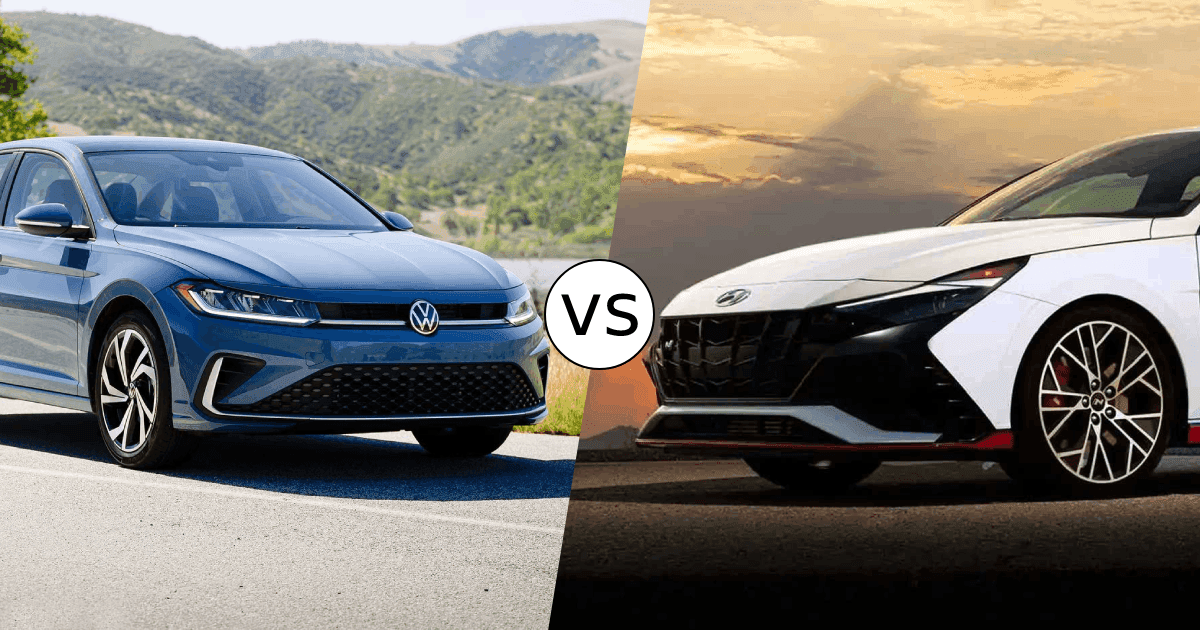
2026 Volkswagen Jetta vs. Hyundai Elantra
The compact sedan segment is one of the most competitive corners of the automotive market, and for good reason. Buyers here want real value: a car that feels well-built, drives confidently, and doesn’t cut corners on everyday comfort. Stack the 2026 Volkswagen Jetta against the Hyundai Elantra and one car keeps pulling ahead. The Jetta brings engineering precision, interior quality, and driving refinement that the Elantra simply can’t match across the board. If you’re already curious, browse our new vehicle inventory and see what’s available at Capistrano Volkswagen.
That’s not a knock on the Elantra. Hyundai has built a genuinely capable car with attractive styling and solid feature content. But this comparison reveals a meaningful gap when you dig into what each vehicle actually delivers behind the wheel, inside the cabin, and at the point of purchase. Below, we break down exactly where that gap exists and why the Jetta consistently earns the edge.
Interior Quality and Cabin Experience: The Jetta’s Most Obvious Edge
Walk into any dealership, open both cars back to back, and the difference becomes clear within seconds. The Jetta’s cabin communicates a level of care in its construction that feels genuinely more premium. Materials are more substantial, surfaces are better finished, and the overall atmosphere lands closer to a luxury compact than a budget commuter. That distinction matters when you think about how many hours drivers actually spend inside their vehicles each week.
Premium Materials and Fit-and-Finish That Feel a Class Above
Volkswagen has long prioritized cabin craftsmanship, and the 2026 Jetta carries that tradition forward. Soft-touch surfaces, tight panel gaps, and thoughtful control placement create an environment that feels intentional rather than assembled to a price point. The Hyundai Elantra has made real strides in interior design, particularly with its angular styling, but its materials don’t hold up to the same scrutiny. Plastics in key contact areas feel noticeably harder, and the switchgear’s tactile quality lags behind what you get in the Jetta.
For anyone putting in serious commute hours on Southern California freeways, that consistent quality pays dividends every single day. It’s the kind of refinement that doesn’t show up on a spec sheet but becomes impossible to ignore once you’ve experienced it.
Passenger Space, Seat Comfort, and Long-Trip Livability
Legroom and headroom are two areas where the Jetta genuinely shines. Both front and rear passengers benefit from a thoughtfully proportioned cabin that sidesteps the cramped feeling common in many compact sedans. The seats are supportive and shaped for longer journeys, providing lumbar and thigh support that makes a two-hour highway stretch feel manageable rather than punishing.
The Elantra offers respectable passenger space, but rear headroom can feel tight for taller occupants. For families, road-trippers, or anyone who regularly carries passengers in the back, the Jetta’s livability advantage is a very practical reason to choose it.
Driving Dynamics: Where the Jetta Feels Like a Driver’s Car
A car’s personality reveals itself most clearly on the road, and this is where the comparison gets genuinely interesting. The Jetta was engineered with driving engagement in mind. It’s not pretending to be a sport sedan, but it delivers tactile feedback and composure that makes everyday driving feel connected and enjoyable rather than something to simply endure.
Steering Precision, Handling Response, and Ride Refinement
The Jetta’s steering is one of its most praised qualities. It’s precise, appropriately weighted, and offers real road feel rather than the vague, overly assisted sensation some compact sedans produce. That directness translates into confident lane changes, smooth cornering, and a sense of control that builds quickly. The suspension tuning absorbs urban imperfections while staying composed when the road opens up. For the kind of mixed driving Southern California demands, that balance is exactly right.
Turbocharged Power, Torque, and the 8-Speed Automatic Advantage
The Jetta’s turbocharged engine produces 158 hp at 5,500 rpm and 184 lb-ft of torque arriving as low as 1,750 rpm. That low-end torque delivery is what you actually feel when merging onto the freeway or pulling out of a slow urban intersection. Power is available immediately without having to wind the engine up first. Paired with an 8-speed automatic transmission, the Jetta delivers smooth, well-timed shifts that make daily driving feel effortless whether you’re navigating stop-and-go traffic or cruising at highway speed.
The Elantra produces 147 hp at 6,200 rpm and 132 lb-ft of torque at 4,500 rpm, paired with a Smartstream IVT (Intelligent Variable Transmission). The IVT is mechanically efficient, but it can feel less engaging under acceleration, and the higher rpm demand means you’re working the engine harder to access peak output. In real-world conditions, the Jetta’s turbocharged torque advantage and 8-speed automatic give it a noticeably more satisfying driving character.
Cargo Space and Practicality: Edge to the Jetta on Flexibility
Practicality is a major purchase driver in this segment. On raw cargo volume, the two cars are essentially even, the Jetta offers 14.1 cubic feet of trunk space, while the Elantra comes in at 14.2 cubic feet. The difference is statistically meaningless in real-world loading.
Where the Jetta does earn a practical edge is flexibility: 60/40 split-fold rear seats are standard on every Jetta trim. The Elantra’s base SE trim is limited to a one-piece fold, which restricts how you can carry longer items without occupying the full rear seat.
The Jetta’s trunk also benefits from a wide opening and a relatively low load floor, making it easier to load and unload heavier items.
Fuel capacity and highway range add to the practicality story. The standard Jetta carries 12.8 gallons of fuel and delivers an EPA-estimated highway range of approximately 512 miles. The Elantra’s 12.4-gallon tank produces an estimated 508 miles of highway range. For longer drives, that’s a modest but real advantage for the Jetta.
Technology and Standard Features: More Value Built Into the Base Price
Technology has become one of the defining battlegrounds in compact sedans, and both cars arrive with modern infotainment and safety systems. Volkswagen has done a particularly good job loading genuine value into base and mid-level trims, giving buyers more functionality without forcing a step up the price ladder.
Infotainment Interface, Connectivity, and Screen Usability
The Jetta’s infotainment system is intuitive and responsive, with a well-organized touchscreen that doesn’t require much of a learning curve. Wireless Apple CarPlay and Android Auto integration make smartphone connectivity seamless. The display sits naturally within the driver’s sightline, and the system’s logic is straightforward enough to operate without extended visual attention while driving.
The Elantra’s infotainment is similarly capable and, in some trim configurations, offers a visually impressive dual-screen setup. But the interface can bury certain functions behind menus that interrupt the driving experience. Day-to-day usability gives the Jetta a consistent edge here.
Driver Assistance Features Included Across the Trim Lineup
Volkswagen has made driver assistance technology accessible across the Jetta’s trim structure, meaning buyers don’t have to pay premium prices for features like forward collision warning, automatic emergency braking, blind-spot monitoring, or lane-keeping assist. These systems are well-calibrated and intervene predictably without being intrusive during normal driving.
The Elantra also offers a broad safety suite, and Hyundai deserves credit for its commitment to standard safety features. Still, the combination of how these systems behave in real-world conditions and how they’re packaged across price points makes the Jetta’s safety value story particularly compelling.
Pricing and Trim Structure: Where the Jetta Delivers More Per Dollar
The pricing conversation is one of the most important for practical buyers. The Jetta competes aggressively relative to what it delivers, offering premium interior materials, a polished driving experience, solid cargo space, and standard technology without demanding significant compromise.
When you compare similarly equipped trims across both models, the Jetta frequently offers more for comparable cost. Build quality and long-term satisfaction both factor into total ownership value, and the Jetta’s reputation for solid construction supports confidence in the purchase over time. Volkswagen has worked to address historical reliability perceptions, and the current Jetta generation reflects a brand that takes build quality seriously.
How These Two Sedans Stack Up: A Side-by-Side Comparison
Putting the numbers side by side makes the decision clearer. Here’s how the 2026 Jetta and 2026 Elantra compare across the key specs:
| Feature | 2026 Volkswagen Jetta | 2026 Hyundai Elantra |
| Horsepower | 158 hp @ 5,500 rpm | 147 hp @ 6,200 rpm |
| Torque | 184 lb-ft @ 1,750 rpm | 132 lb-ft @ 4,500 rpm |
| Transmission | 8-speed automatic | Smartstream IVT |
| Fuel Capacity | 13.2 gal. | 12.4 gal. |
| Highway Range | 528 miles | 496 miles |
| Wheelbase | 105.7 in. | 107.1 in. |
The Jetta leads in interior material quality, torque delivery, transmission refinement, highway range, and overall driving engagement. The two sedans carry nearly identical cargo volumes. The Elantra remains a solid compact sedan with genuine strengths in styling and entry-level feature content. But for buyers who prioritize driving feel, interior refinement, and build quality that holds up over years of ownership, the Jetta is the stronger choice. We’re happy to walk you through financing options that make getting into one straightforward.
Find Your 2026 Volkswagen Jetta at Capistrano Volkswagen
We make it easy to move from research to the road at Capistrano Volkswagen in San Juan Capistrano, CA.
Explore Our Current Jetta Lineup
Our inventory is updated regularly, and we carry the full range of 2026 Jetta trims so you can find the exact configuration that fits your priorities. View our 2026 Jetta inventory to see what’s available and request more information on any vehicle that catches your eye.
Schedule a Test Drive or Get Your Questions Answered
There’s no substitute for experiencing the Jetta firsthand. The steering feel, cabin quality, and turbocharged power delivery are things that become obvious within the first few miles. Our sales team is available to schedule a test drive, walk through trim differences, or answer specific questions about the Jetta versus any other compact sedan you’re considering.
Contact Us and Get Started Today
You can reach us at (949) 493-4511. Sales hours run Monday through Friday from 8 AM to 7 PM, Saturday from 9 AM to 7 PM, and Sunday from 10 AM to 6 PM. Or contact us online at any time and a member of our team will follow up promptly. We look forward to helping you find the right Jetta for your driving life.
0 comment(s) so far on 2026 Volkswagen Jetta vs. Hyundai Elantra