


2026 Volkswagen Atlas vs. 2026 Honda Pilot
Shopping for a three-row SUV means weighing what matters most to your family. The 2026 Volkswagen Atlas vs Honda Pilot debate centers on two solid contenders, each bringing spacious interiors and family-friendly features to the table. Compare specs side by side, though, and the Atlas pulls ahead with better torque output, superior fuel efficiency, and a more generous standard equipment list. Sure, the Pilot delivers more maximum cargo space and that proven reliability reputation, but the Atlas hits a sweet spot between value and capability for families wanting modern tech without giving up performance.
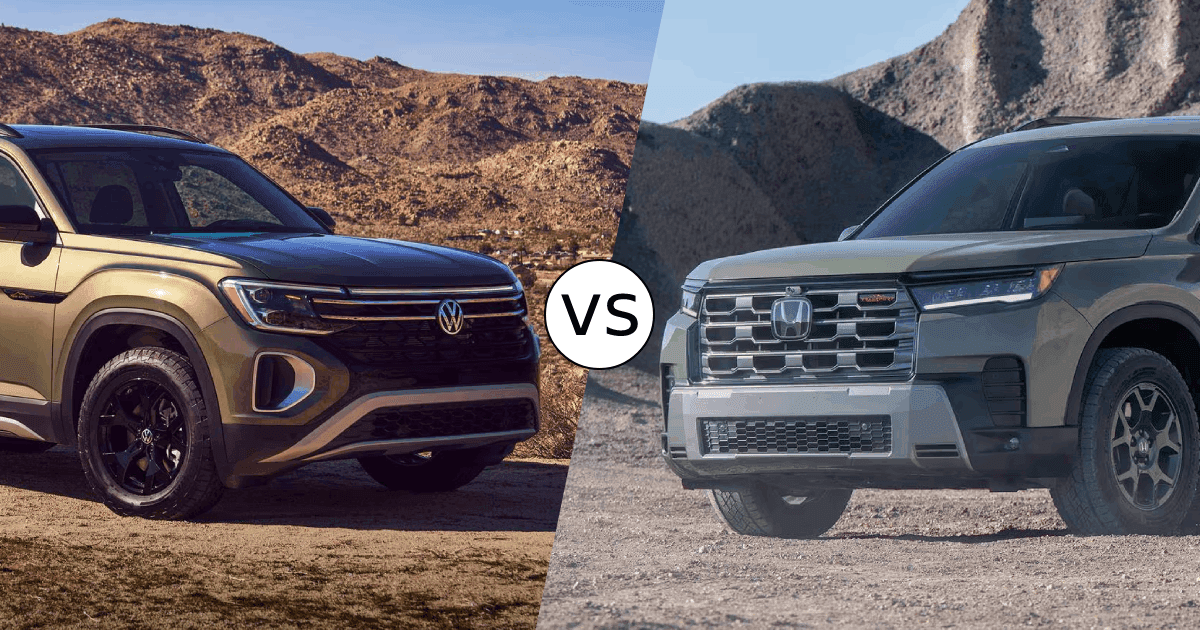
2026 VW Atlas vs. Honda Pilot: Quick Comparison Overview
Both SUVs target families needing three rows of seating and weekend adventure capability, but they take different routes to get there. Here’s the breakdown:
| Feature | 2026 Volkswagen Atlas | 2026 Honda Pilot |
| Engine | 2.0L turbo 4-cylinder | 3.5L V-6 |
| Horsepower | 269 hp | 285 hp |
| Torque | 273 lb-ft | 262 lb-ft |
| Transmission | 8-speed automatic | 10-speed automatic |
| Drivetrain | FWD standard; 4MOTION AWD available | FWD standard; AWD available |
| Towing Capacity | 5,000 lbs (SE w/ Technology+); 2,000 lbs (base SE) | 5,000 lbs (AWD); 3,500 lbs (FWD) |
| EPA MPG (City/Hwy/Comb, FWD) | 20/27/23 | 19/27/22 |
| Seating | 7 passengers | 7-8 passengers |
| Cargo (Behind 3rd/2nd/Max) | 20.6/55.5/96.6 cu ft | 22.4/60.1/113.7 cu ft |
The Atlas emphasizes turbocharged efficiency and standard features, while the Pilot focuses on V6 power and maximum cargo capacity. Where the Atlas really shines: superior torque (273 lb-ft vs. 262 lb-ft), better fuel economy, and a lower starting price that doesn’t make you sacrifice technology. Standard features heavily favor the Atlas, which includes heated and ventilated front seats, standard wireless charging, and advanced safety tech right from the base SE trim.
Performance and Powertrain: Where the Atlas Pulls Ahead
The Atlas comes equipped with a turbocharged 2.0-liter four-cylinder engine producing 269 horsepower and 273 lb-ft of torque, paired with an eight-speed automatic transmission. This combination delivers smooth acceleration and responsive handling during highway merges and daily commutes. The Honda Pilot relies on a 3.5-liter V6 generating 285 horsepower, which sounds impressive but delivers less torque at lower RPMs where families actually spend most of their driving time.
Here’s what makes the difference: the Atlas’s turbocharged engine creates a robust torque curve that peaks early, providing confident acceleration from a standstill. This makes it perfectly suited for suburban driving in San Juan Capistrano and throughout Southern California. The Pilot’s V6, while powerful, operates with a narrower torque band that might not deliver the same immediate responsiveness during stoplights or on-ramps.
Fuel economy favors the Atlas in FWD configuration, achieving an EPA-estimated 23 mpg combined compared to the Pilot’s 22 mpg combined with front-wheel drive, a difference that adds up over years of ownership. Over thousands of miles, this difference saves families money at the pump while reducing their environmental footprint. The eight-speed automatic transmission shifts smoothly and intelligently predicts driver needs, holding gears during spirited driving or upshifting early to maximize efficiency.
Both vehicles offer all-wheel drive, but the Atlas features Volkswagen’s 4MOTION system, and all Atlas models include Drive Mode Select with a dedicated snow mode. This enhances traction and stability across various driving conditions. The system distributes power between the front and rear axles seamlessly without requiring driver input, providing improved safety and capability for families navigating rain-slicked streets or mountain getaways.
The 2026 Volkswagen Atlas: Distinctive Features Across Trims
The Atlas delivers exceptional value across its entire trim lineup. The SE trim starts with heated and ventilated front seats (a feature many competitors reserve for higher-priced models). The 12-inch touchscreen infotainment system comes standard, providing a modern digital interface for navigation, entertainment, and vehicle settings.
Advanced driver-assistance technologies arrive from the start, including forward collision warning, automatic emergency braking, and blind-spot monitoring. Step up to the SE with Technology and you’ll get a standard integrated trailer hitch with 5,000-lb towing capacity, a hands-free power liftgate, remote engine start, and front and rear parking sensors. The Peak Edition brings unique exterior styling and enhanced comfort with standard AWD.
Mid-level SEL trims add genuine leather upholstery, heated rear outboard seats, a head-up display, and multicolor ambient lighting while the panoramic sunroof, already included on the Peak Edition, continues as standard. Premium R-Line introduces massaging. This range means buyers can select a configuration matching their budget without feeling shortchanged on essential features. Ready to explore our new vehicle inventory? Our team can walk you through each trim’s unique advantages.
The 2026 Honda Pilot: What the Competition Offers
The Honda Pilot brings its own strengths to the segment, built on decades of reputation for reliability and resale value. Certain trims offer seating for up to eight passengers, adding an extra spot compared to the Atlas’s seven-passenger configuration. The Pilot also delivers more maximum cargo space at 113.7 cubic feet with all seats folded, compared to the Atlas’s 96.6 cubic feet.
But here’s where things get tricky: the base Pilot lacks several premium features found standard in the Atlas, including ventilated front seats and standard wireless charging. The Pilot’s entry-level technology package requires buyers to opt for higher trims to match what the Atlas offers from the start. The TrailSport trim enhances off-road capability with additional ground clearance and rugged styling, appealing to adventurous families, though this specialized capability comes at a price premium that exceeds what most suburban families actually need.
Technology and Standard Features: Atlas Leads the Way
The Atlas embraces connected family life with comprehensive technology integration. The customizable digital cockpit replaces traditional gauges with a crisp display showing speed, navigation, media information, and vehicle diagnostics. Drivers can configure the display to prioritize relevant information, reducing distraction.
Wireless smartphone integration through Apple CarPlay and Android Auto comes standard, eliminating cable clutter. Multiple USB-C charging ports throughout the cabin, including in the second and third rows, ensure everyone’s devices stay powered during long drives. Voice command functionality responds accurately to natural speech, allowing drivers to adjust climate controls, change music, or input destinations without taking hands off the wheel.
The Pilot’s technology offerings compete reasonably but often require higher trims to access similar features. While both vehicles now offer large touchscreens standard, the Atlas includes six USB-C ports and heated and ventilated front seats from the base SE trim, features the Pilot reserves for higher trims. The Atlas’s approach of making advanced technology standard creates a more satisfying ownership experience across the entire lineup.
Interior Space, Comfort, and Safety for the Whole Family
The Atlas creates a genuinely spacious cabin that doesn’t compromise any row. Third-row passengers have sufficient legroom and headroom for adults, not just children. While the Pilot offers more maximum cargo capacity (113.7 cu ft vs. 96.6 cu ft with all seats folded), the Atlas provides comparable space behind the third row at 20.6 cubic feet versus the Pilot’s 22.4 cubic feet. Both offer practical daily hauling capability for groceries, sports equipment, and luggage.
Second-row comfort deserves attention since this is where many passengers spend the most time. The Atlas offers generous shoulder room and the ability to slide seats forward or backward to balance legroom between rows. Climate controls allow rear passengers to adjust their comfort independently, reducing conflicts over temperature settings.
Safety features in the Atlas include a comprehensive suite of driver-assistance technologies. Automatic emergency braking detects vehicles, pedestrians, and cyclists. Lane-keeping assist gently steers the Atlas back into its lane if it begins to drift. Rear cross-traffic alert warns drivers of approaching vehicles when backing out of parking spaces. The Atlas’s approach of including advanced safety tech across the lineup means every family benefits regardless of budget.
Why the 2026 VW Atlas Wins This Matchup
The Atlas ultimately favors families seeking the best combination of features, technology, and value. The starting price advantage matters, but what you receive matters more. The Atlas delivers heated and ventilated seats, standard wireless charging, comprehensive safety systems, and better fuel economy without requiring buyers to step up multiple trim levels.
Performance feels more responsive in daily driving thanks to the turbocharged engine’s superior torque (273 lb-ft vs. 262 lb-ft), making the Atlas more enjoyable during commutes and errands. The available 4MOTION all-wheel-drive system, combined with Drive Mode Select including a dedicated snow mode, provides confidence in challenging weather. Technology integration reflects modern expectations, with wireless connectivity, multiple charging ports, and an intuitive digital interface that won’t feel outdated.
The Pilot offers more maximum cargo space and optional eight-passenger seating, true. But the Atlas strikes the better balance for most families. Interior space extends comfortably to all three rows, fuel economy saves money over years of ownership, and standard features exceed what competitors offer at similar price points.
Ready to experience the 2026 Atlas firsthand? Visit Capistrano Volkswagen in San Juan Capistrano to view our Atlas lineup and discover why it stands out in the three-row SUV segment. Our team at 32922 Valle Rd is ready to answer your questions. Call (949) 493-4511 to schedule a test drive.
Frequently Asked Questions
Which SUV has more cargo space: the 2026 VW Atlas or Honda Pilot?
The Honda Pilot offers more maximum cargo space at 113.7 cubic feet with all seats folded, compared to the Atlas’s 96.6 cubic feet. Behind the third row, the Pilot provides 22.4 cubic feet versus the Atlas’s 20.6 cubic feet. However, both offer practical daily hauling capability for family needs like groceries, sports equipment, and luggage. The Atlas compensates with superior torque, better fuel economy, and more standard technology features at comparable price points.
Does the VW Atlas or Honda Pilot offer better towing capacity?
Both the Atlas and Pilot can tow up to 5,000 pounds when properly equipped. The Atlas achieves this capacity with the SE with Technology trim and higher, which includes a standard trailer hitch. The base SE offers 2,000-lb towing with an aftermarket hitch. The Pilot requires AWD to reach its maximum 5,000-pound capacity; FWD models max out at 3,500 pounds. For families who tow regularly, the Atlas’s consistent 5,000-lb capability across mid-level and higher trims simplifies the buying decision.
Which three-row SUV delivers better overall value?
The Atlas delivers superior overall value when considering features, performance, and pricing. It starts at a competitive price while including premium features like heated and ventilated front seats, a 12-inch touchscreen, and comprehensive safety technologies that the Pilot reserves for higher trims. Better fuel economy (23 mpg combined vs. 22 mpg) saves money over years of ownership. Superior torque (273 lb-ft vs. 262 lb-ft) provides satisfying performance, while technology integration feels more modern with wireless connectivity and multiple charging ports. For families seeking maximum features and capability without overspending, the Atlas represents the smarter investment.
0 comment(s) so far on 2026 Volkswagen Atlas vs. 2026 Honda Pilot